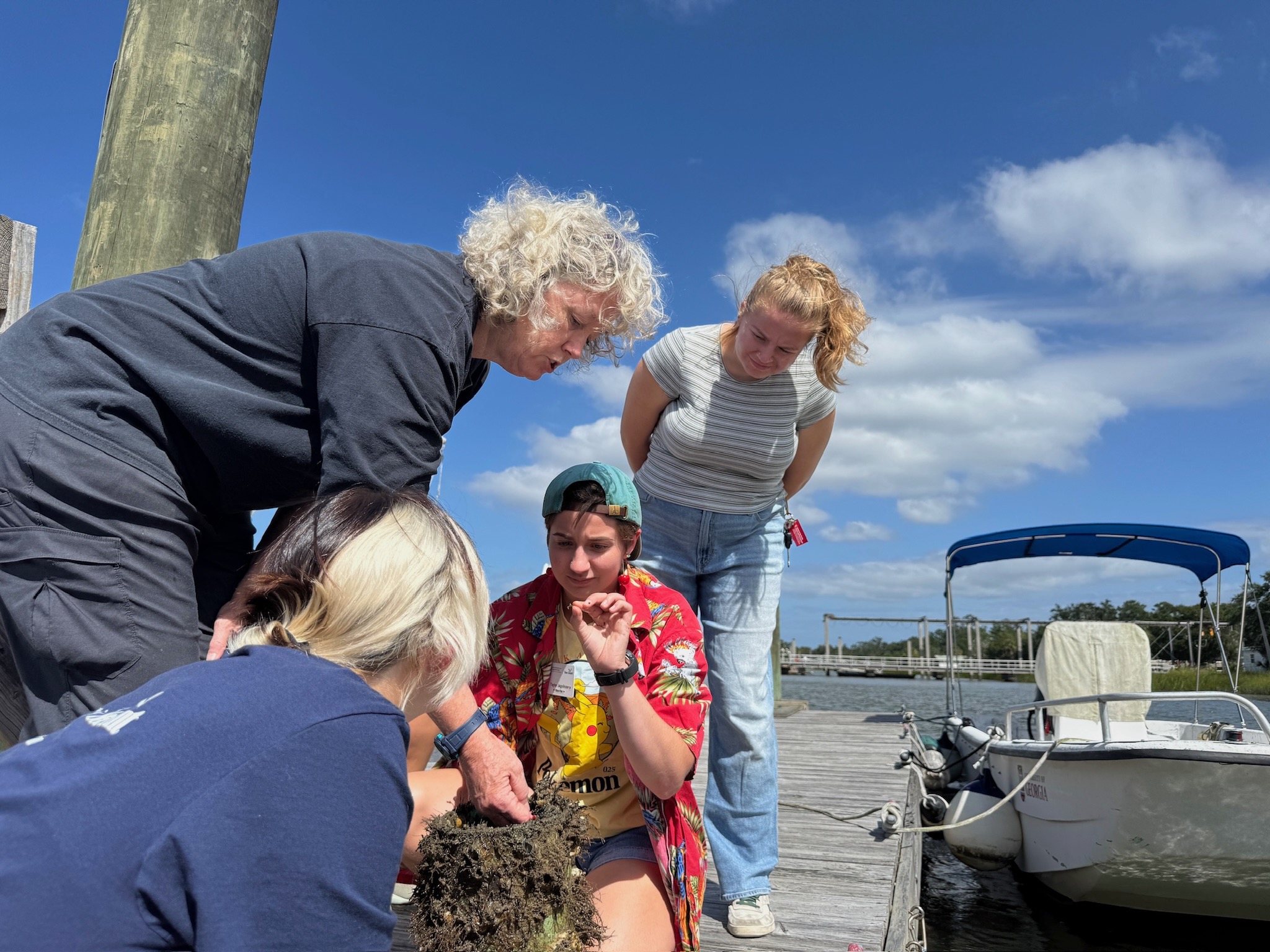
My name is Zoë Stalham. I am an undergraduate student studying marine biology at Queen’s University Belfast. Over the past year, I’ve had the incredible opportunity to work as a International Fellow in coastal Georgia with Marine Extension and Georgia Sea Grant.
A year ago, I couldn’t have told you what a barrier island was — let alone imagined that I’d be living on one and teaching people about ecosystems I hadn’t even known existed.
Growing up in London meant that, for me, marine science lived in textbooks. I memorized facts for exams and read about all these unfamiliar places. I occasionally got to explore on a university field trip, but it all felt distant — like I was studying something happening somewhere else. I was fascinated but disconnected.
Then I moved to coastal Georgia. Suddenly, the salt marsh wasn’t just a photo in a textbook — it was right outside my window. The maritime forests, estuaries, and tidal creeks became part of my everyday life. And I realized quickly: there’s no substitute for living inside an ecosystem if you want to understand it.
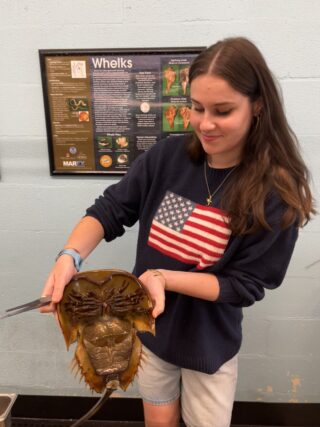
Growing up, I didn’t know any scientists, and for a long time, I wasn’t sure what a career in science could look like for me. Without many role models to follow, stepping into the professional world of marine science was both exciting and intimidating. It took some time to figure out what worked for me, but I discovered that embracing my strengths as a visual learner and creative thinker made all the difference.
One of the highlights of my time here was serving on the planning committee for the Youth Ocean Conservation Summit, an annual event designed to engage and inspire students in conservation efforts. My role focused on public relations: designing the event t-shirt, creating the program, and supporting social media outreach. Through this experience, I saw firsthand how important events like this are for making conservation accessible. They provide students from a wide range of backgrounds the chance to immerse themselves in marine science, connect with peers and mentors, and be empowered to design their own conservation projects. This experience made me realize how powerful it can be to give people the skills to share their own perspectives on the natural world.
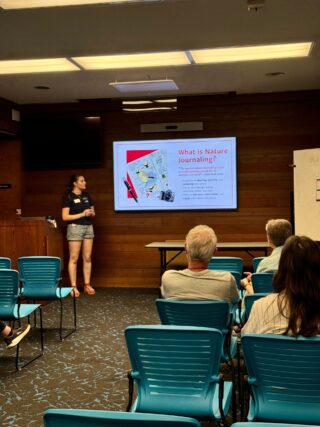
Building on that experience, I developed a public program called Eco-Lens, which taught participants how to create short videos as a form of nature journaling. We explored filming techniques, collected footage outside in our coastal ecosystems, and wrapped up with an editing workshop. Watching participants share their finished projects and their perspectives on the natural world was incredibly rewarding — and reinforced something I believe deeply: that science communication is just as important as scientific research. Making knowledge accessible and engaging allows more people to connect with conservation, regardless of where they live or what their background might be. To me, video is an effective and accessible way to communicate scientific knowledge.
Living and working on the Georgia coast has sharpened my skills in ways I never expected. I’m now more confident in identifying species, conducting fieldwork, and collaborating professionally. But more importantly, I’ve learned that science isn’t just about experiments or technical reports — it’s about sharing the complexity of the natural world in ways that are creative, inclusive, and inspiring.
This fellowship has shown me that there’s no “right” way to be a scientist. You can be a visual thinker, a researcher, or an educator, and still contribute meaningfully to the field. I’m excited to continue building a career that blends research with communication and creativity to make science accessible for everyone.