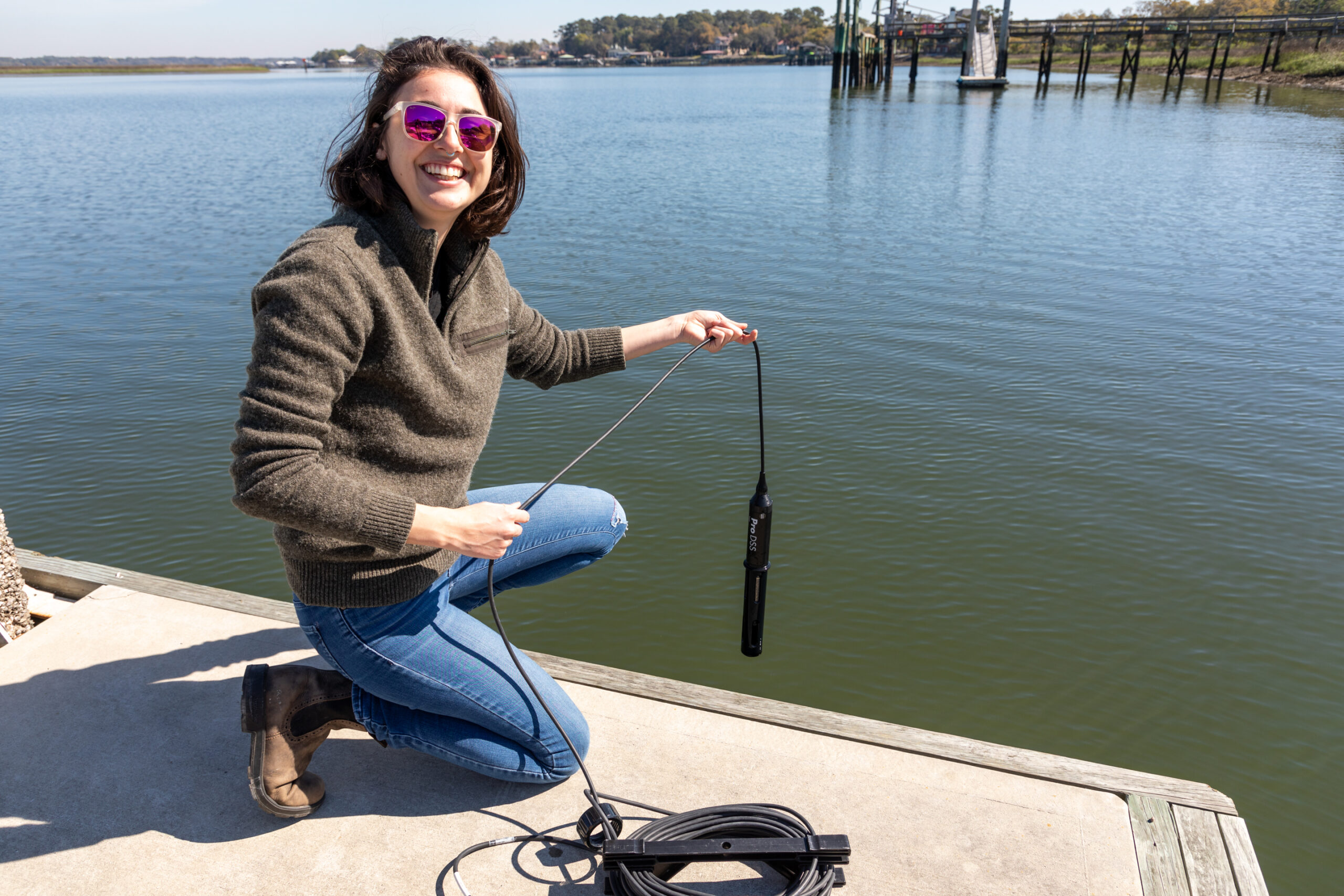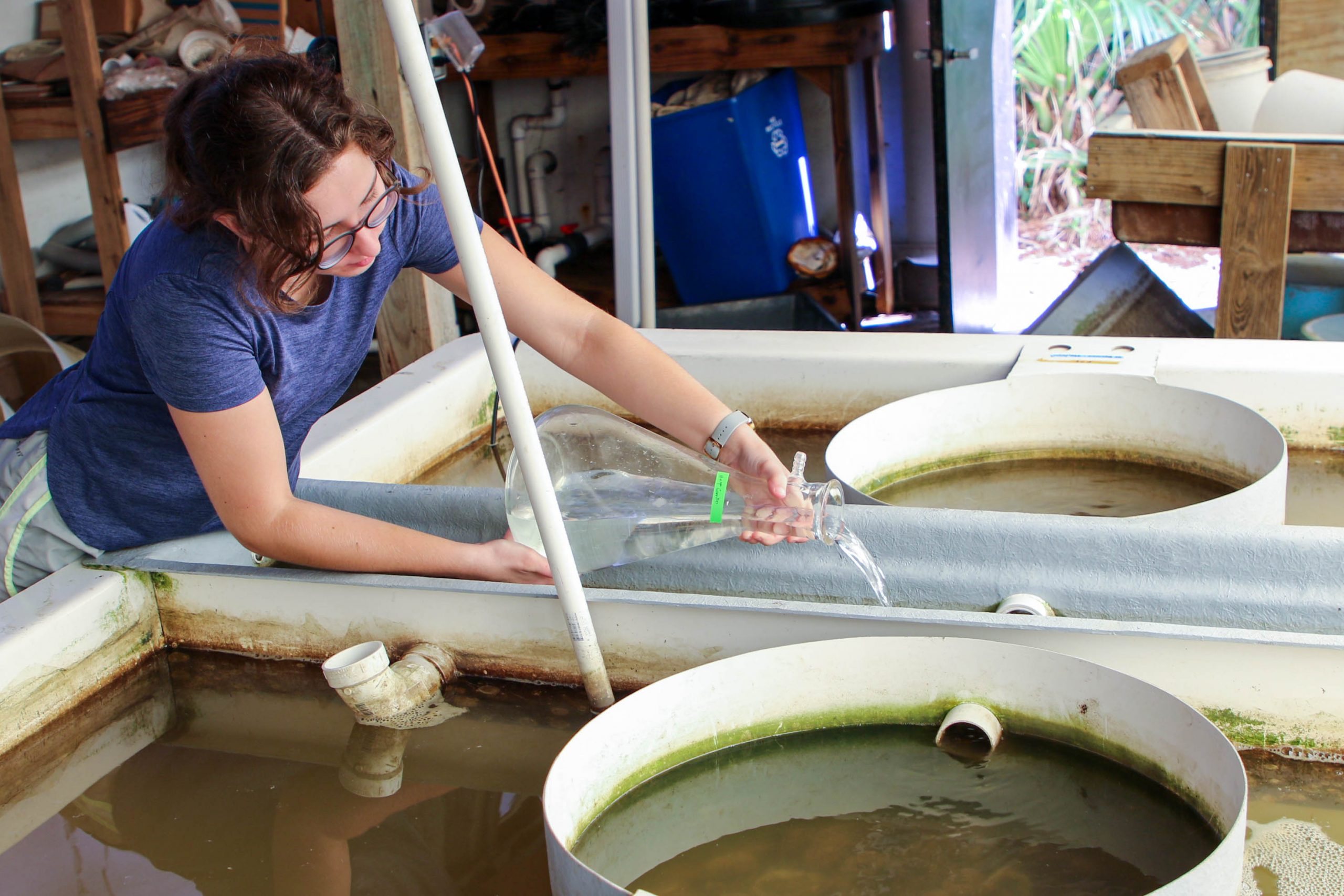
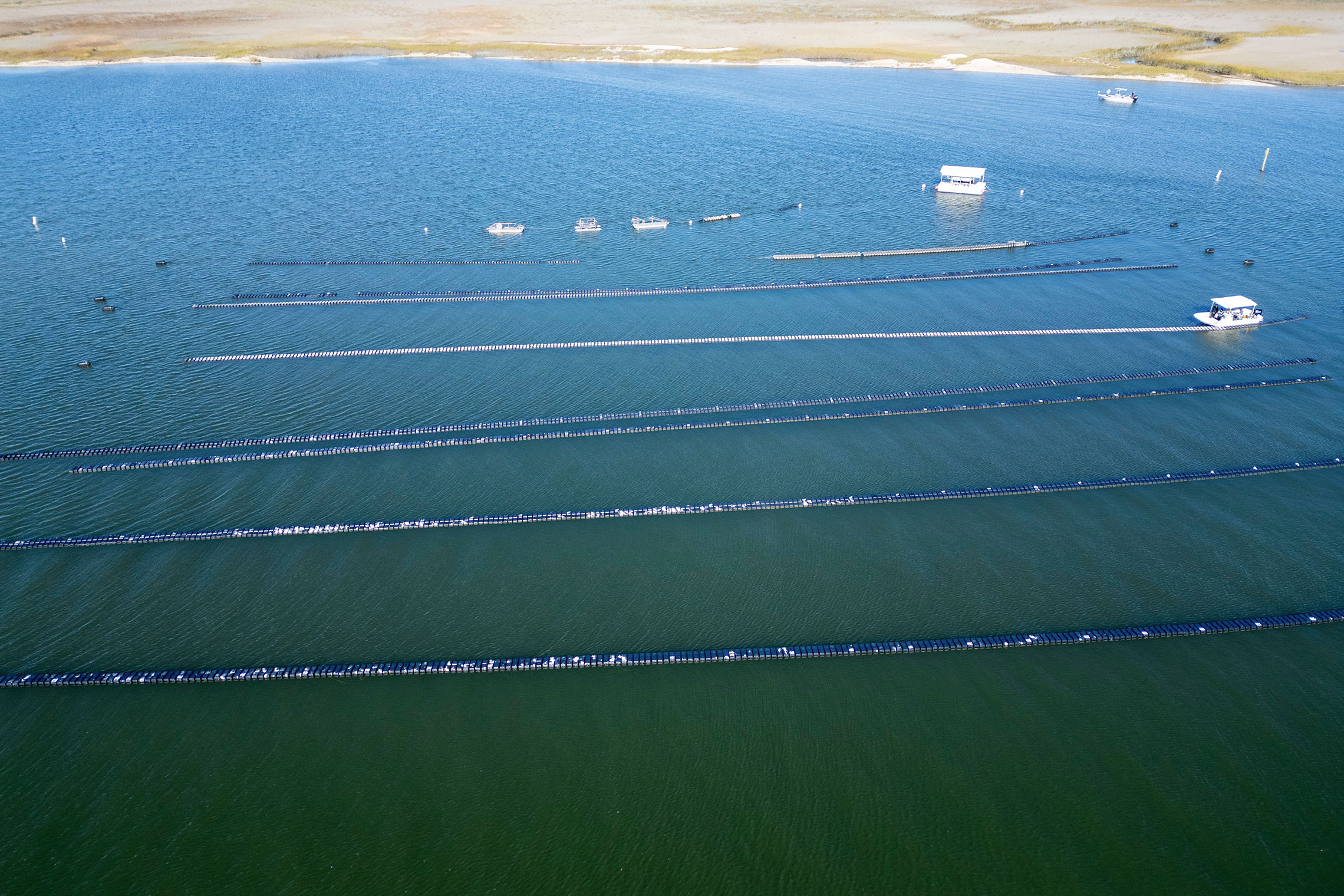
Aquaculture is the farming of aquatic organisms such as fish, crustaceans, mollusks and aquatic plants. As demand for edible fish and shellfish continues to increase, many state and federal agencies now consider aquaculture as a primary means of future production of the nation’s seafood.

Marine Extension and Georgia Sea Grant invests in the development of sustainable aquaculture to help coastal communities maintain a safe, local seafood supply. Our investment focuses on production, research and technology transfer to support and expand the U.S. aquaculture industry.  

The Shellfish Research Lab at Marine Extension and Georgia Sea Grant serves as the main hub for aquaculture activities. Specialists at the lab conduct research on cultivating native species, like clams and oysters, and developing disease prevention strategies to support a healthy, sustainable shellfish industry. Across the unit, we also have specialists working in seafood safety, law and policy, and marine education who lend their expertise to developing aquaculture resources for industry professionals, students, resource managers and more. 

Contact
Thomas Bliss
Director of Shellfish Research Lab
912-598-2348
Justin Manley
Hatchery Manager
912-598-2348

Oyster Aquaculture

The Eastern oyster (Crassostrea virginica) is native to estuaries along the U.S. Atlantic coast, from the Chesapeake Bay through the Gulf of Mexico. In Georgia, oysters were once abundant and heavily harvested in the late 1800s and early 1900s. In 1908, Georgia led the nation in oyster landings, largely driven by the oyster canning industry. Since the 1930s, however, overharvesting and other factors have led to a sharp decline in oyster populations. 

In 2019, the Georgia legislature passed a law providing for commercial oyster farming in the state’s coastal waters. Oyster farming, also known as oyster aquaculture or mariculture, utilizes cages and other gear to grow oysters that are suitable for the half-shell market, and is a growing industry in many coastal states.

Located on Skidaway Island, the Shellfish Research Lab produces millions of spat, or baby oysters, each year. The spat are sold to oyster farmers across the Southeast who grow them into single, market-size oysters for the restaurant industry. 

young oysters

Clam Aquaculture

The northern quahog clam, Mercenaria mercenaria, stands alone as the single most economically valuable, commercially farmed bivalve species in Georgia. Research evaluating hard clam mariculture began at the lab in the early 1980’s,resulting in diversification of the clam industry. In Georgia, there is commercial interest in the culture of southern quahogs within the state to reduce heat losses observed with northern quahog culture.

fresh clams

Resources

Oyster Farming in Georgia: A Beginner’s Guide to Methods, Permitting, and Funding

This guide will help cover the basics of getting into the oyster farming business in Georgia, with helpful tips and simple explanations of the more complex processes. Support for this guidebook was provided by the Jamestown Charitable Foundation.


Technical Manual for Farming the Southern Quahog, Mercenaria campechiensis, in estuaries characteristic of coastal Georgia and the South Atlantic Bight

This field manual provides technical guidance and includes necessary aspects of structuring an intertidal clam farm in regions similar to the South Atlantic Bight, particularly coastal Georgia. It covers equipment, stocking density of nursery and grow-out clams, siting and deployment of clams, and clam harvest. This project was funded by a NOAA Saltonstall-Kennedy grant award.


Final Report: Strengthening the Georgia hard clam industry through expansion into southern quahog, Mercenaria campechiensis, mariculture

This study compared northern and southern quahog clams in Georgia to determine which performed better for commercial farming. This final report explains the study’s findings and recommendations for the future of clam aquaculture in Georgia. This project was funded by a NOAA Saltonstall-Kennedy grant award.


Recent News