

We seek practical, innovative solutions that protect marine resources and sustain local livelihoods.
Marine Extension and Georgia Sea Grant works with Georgia’s commercial fishing families, seafood producers, and recreational anglers to address issues faced by the state’s coastal fishing community. Our goal is to support fisheries that are safe, resilient and economically viable. Through applied research, workforce development, safety training, and habitat restoration, we help fishing communities and ecosystems adapt to environmental change, strengthen local livelihoods, and provide fresh, local seafood for the state.
Commercial Fishing
While relatively small compared to neighboring states, commercial fishing still plays a prominent role in Georgia. Historically, shrimp and blue crab have been Georgia’s largest commercial fisheries with some wild harvest of oysters, various finfish and jellyfish as well. Today hundreds still depend on the fishing industry for their livelihoods, while millions rely on this sector for fresh and frozen local seafood. You can learn more about our research on the economic impact of the industry on our coastal economics page.
Commercial fishing also represents an integral part of coastal Georgia’s culture and heritage. In many cases entire communities are dependent directly or indirectly on the fishing industry. This is particularly true for shrimp, Georgia’s largest commercial fishing sector, where it is fairly common to find multiple generations of the same family involved in shrimping. However, in recent decades Georgia’s shrimping industry has faced a number of challenges such as competition with imported farm raised shrimp, loss of working waterfronts, an aging fleet and dwindling workforce and changing environmental conditions. The need for improved resiliency to such changes has increasingly become more important in recent years.
Marine Extension and Georgia Sea Grant works alongside Georgia’s commercial fishing industry to strengthen the broader seafood sector. Through applied research, industry-led planning, workforce development, and safety training, we support commercial fishing operations and seafood businesses while helping coastal communities remain economically viable and resilient.
Recreational Fishing
Georgia’s healthy coastal ecosystems and popularity as a tourism destination support multi-million-dollar recreational and charter fishing industries. Anglers target inshore species such as red drum, spotted sea trout, and whiting, as well as offshore species including snapper, black sea bass, and mackerel.
Sustaining these fisheries requires responsible fishing practices, habitat enhancement, and science-based management. Marine Extension and Georgia Sea Grant works with anglers, guides, and managers to create resources and address concerns related to overfishing, coastal development, and environmental change, helping ensure access to Georgia’s marine resources for generations to come.
Habitat Restoration
We conduct science-based habitat restoration and ecological research that support fisheries and strengthen coastal resilience. From oyster reef restoration and shell recycling to applied habitat research, Marine Extension and Georgia Sea Grant works to build resilient ecosystems and communities along Georgia’s coast.


Resources
Economic impact of commercial and recreational fisheries
Commercial and recreational fisheries are vital drivers of Georgia’s coastal economy, generating millions in sales, supporting thousands of jobs, and circulating revenue through tourism, seafood markets, and related sectors.
Lowcountry Shrimp Collaborative
This multidisciplinary collaborative highlights research on how changing estuarine conditions affect shrimp populations and their fishery, blending scientific findings with insights from commercial shrimpers to inform sustainable management of this multi-million-dollar industry.
Recent Fisheries Extension Project Reports
Vessels and Railways-Assessing Commercial Fishing Infrastructure in Coastal Georgia
This report evaluates the current state of essential maritime facilities and vessel capacity within the region’s commercial fishing industry. It aims to bridge critical data gaps regarding docks, shipyards, and maintenance infrastructure to better inform state and federal disaster relief spending. The study provides a strategic framework for Georgia DNR to prioritize investments that support the long-term resilience of local working waterfronts.
Southeast Shrimp Strategy and Planning Meeting Report
This report summarizes a 2024 Meeting, which brought together stakeholders from eight states to address severe economic and regulatory challenges facing the domestic shrimp industry. It details collaborative discussions on market dynamics, federal assistance programs, and sustainability initiatives aimed at stabilizing the regional seafood economy. The document serves as a strategic roadmap for harvesters, processors, and agencies to navigate current market hardships and policy changes.
A Next Gen Seafood Industry: Framing a Career-Development Program
Marine Extension and Georgia Sea Grant was awarded funding this opportunity from the Food from the Sea initiative, a funding program developed by the National Sea Grant Office to plan for upcoming opportunities associated with the Young Fishermen Development Act passed in December of 2020. In partnership with North Carolina and South Carolina Sea Grant programs, we organized focus groups with commercial fishing and aquaculture industry representatives to solicit input on what is needed to build effective career development initiatives relevant to the region’s commercial fishing and aquaculture industries.
Southern Shrimp Trawl Shark Depredation Workshops Report
This report analyzes the economic and operational impacts of shark depredation and explores potential mitigation strategies to reduce gear loss. By gathering input from harvesters and researchers across the region, it aims to develop practical solutions that balance shark conservation with the viability of the commercial shrimp industry.
Recent News
- UGA awarded $8M NOAA grant to restore salt marsh in the Southeast
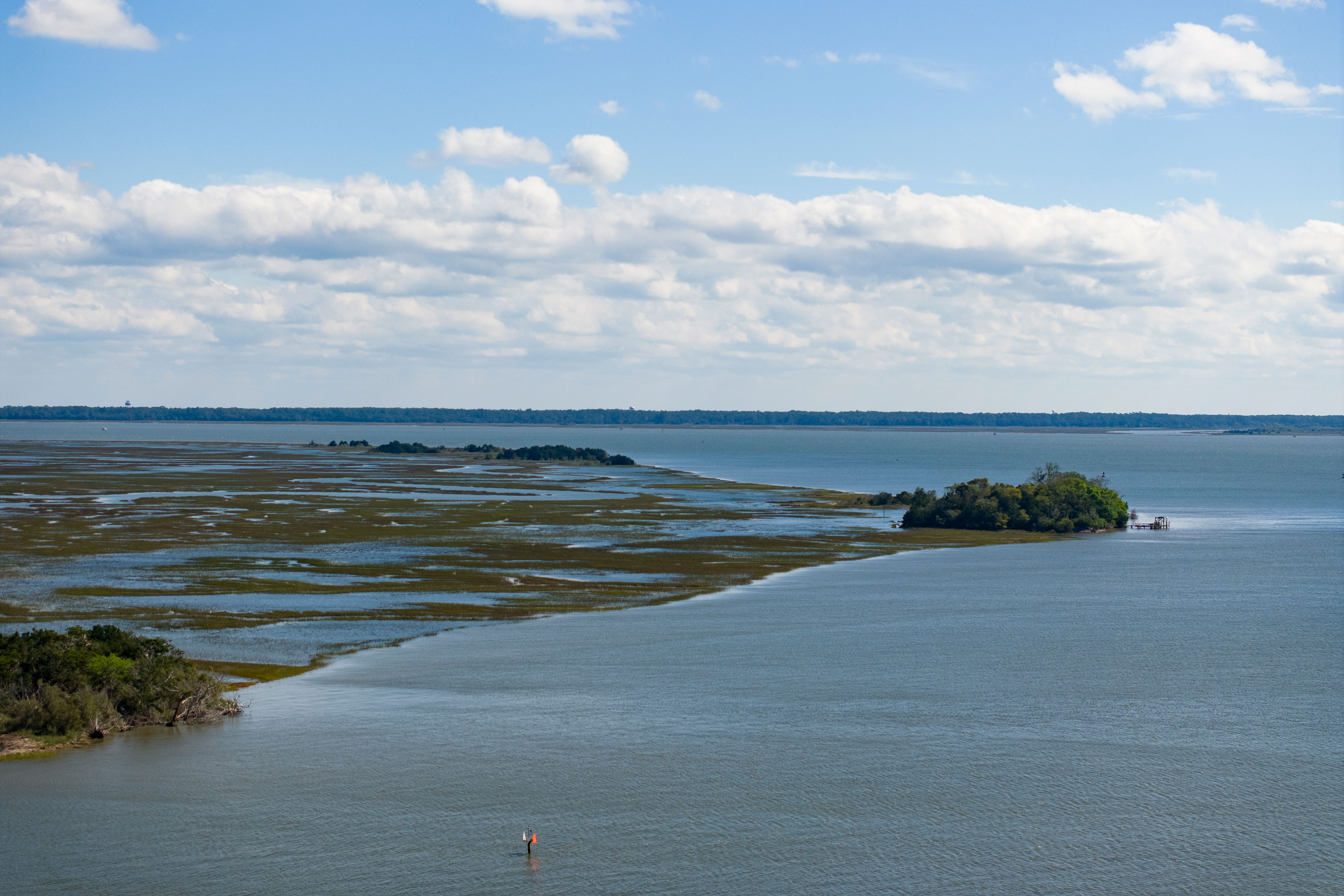 The three-year regional initiative is designed to restore salt marsh habitat across the South Atlantic.
 - Seafood Month celebration includes tastings, volunteer opportunities and boat trips
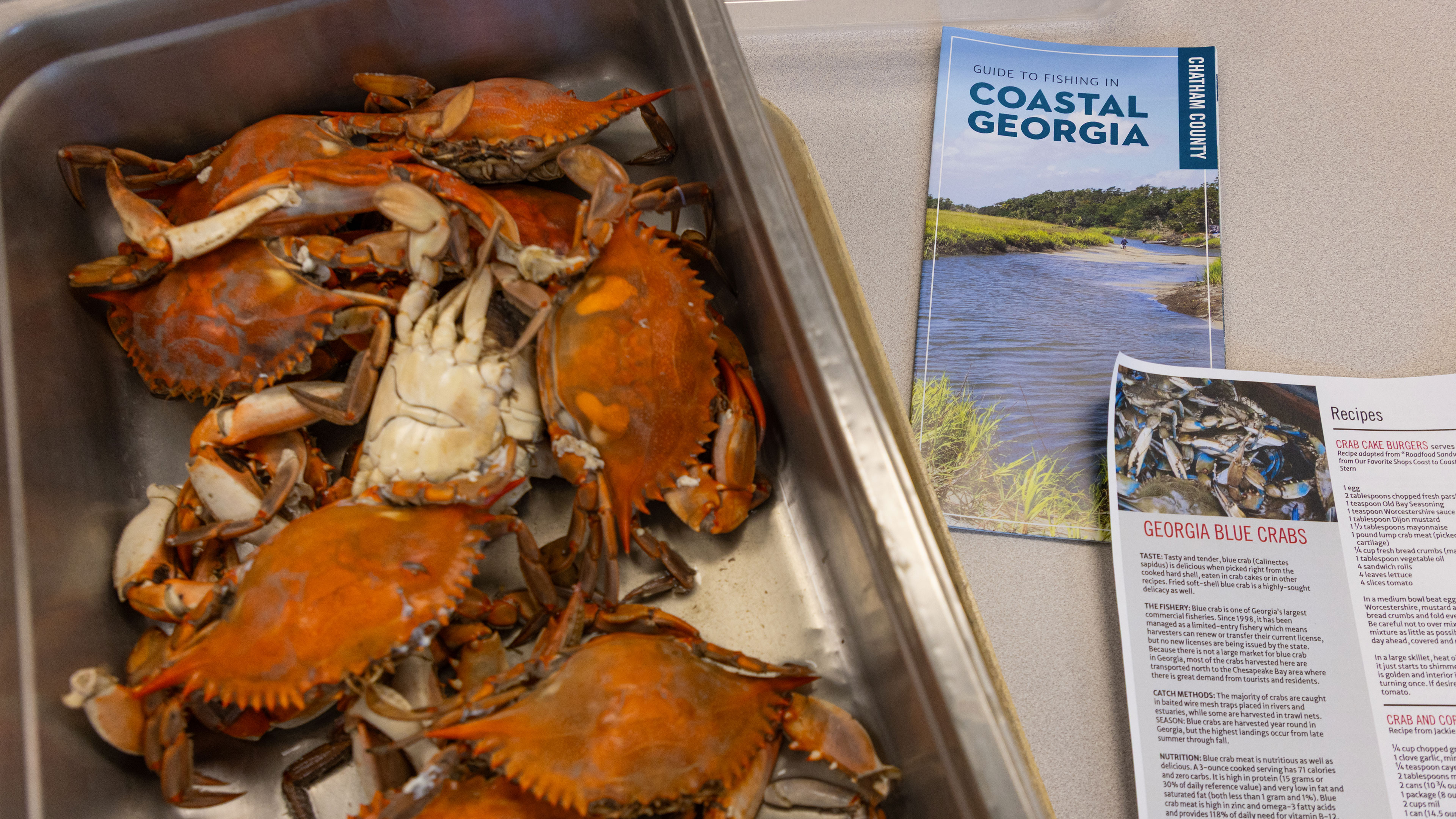 Throughout October, Marine Extension and Georgia Sea Grant is celebrating National Seafood Month with a series of events…Read story
 - The future is jelly
 How UGA researchers are finding new uses for cannonball jellyfish, creating opportunities for sustainability and economic growth along…Read story
 - Georgia Seafood Summit builds momentum for the state’s seafood industry
 Seafood industry professionals from across the state gathered Feb. 24–25 at the Georgia Grown Resource Center in Metter for the Georgia Seafood Summit.…Read story