Four graduate students from the University of Georgia, Georgia Tech and Georgia Southern University are conducting year-long coastal research projects through Marine Extension and Georgia Sea Grant’s Research Traineeship. Under the guidance of faculty and professional mentors, each trainee develops an independent project that addresses one of Marine Extension and Georgia Sea Grant’s four focus areas: healthy coastal ecosystems, sustainable fisheries and aquaculture, resilient communities and economies, and environmental literacy and workforce development.
The projects selected for funding explore such topics as biodiversity of oyster reefs used in shoreline stabilization, the use of jellyfish byproducts to create sustainable food ingredients and packaging, and environmental factors and harvesting practices that affect Vibrio bacteria in oysters.
“The research traineeship gives students the opportunity to work with practitioners across different coastal industries, addressing community-identified needs and translating science into practical solutions,” says Mark Risse, director of Marine Extension and Georgia Sea Grant.
Student projects at a glance:
Gina Fimiano, a master’s student in food science and technology at UGA, is studying a sustainable antifreeze ingredient made from cannonball jellyfish collagen peptides.
Her research explores whether these peptides, which have natural anti-freezing properties, can prevent ice crystal formation on frozen products caused by temperature fluctuations during storage and transport. The food industry’s current methods rely on synthetic cryoprotectants. Developing a natural alternative could improve current food systems, safety and sustainability while also supporting Georgia’s jellyfish industry.
“The [traineeship] has connected me with mentors who inspire me, given me hands-on experience, and helped me visualize how my work can make a real impact in both science and community. Through the resources, training, and professional development this program provides, I am gaining the skills and perspective I need to translate my research into real-world solutions that strengthen Georgia’s coastal and food industries.”
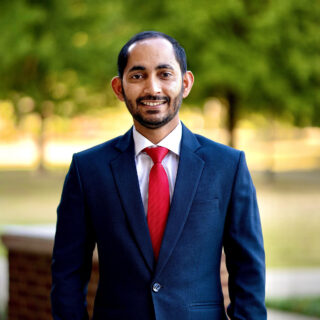
Joinul Islam, a Ph.D. student in food science and technology at UGA, is developing a biodegradable plastic film from Georgia-caught cannonball jellyfish gelatin.
Traditional, nonbiodegradable plastics contribute heavily to marine and soil pollution. Islam’s project aims to create a naturally decomposing alternative to traditional plastics while matching their strength, flexibility and durability. By creating a sustainable jellyfish byproduct from an abundant commercial species, the project could support Georgia’s coastal fishing economy while helping reduce marine plastic waste.
“My long-term goal is to become a researcher dedicated to advancing sustainable aquatic food systems and environmentally friendly packaging technologies. Through this traineeship, I will gain interdisciplinary experience connecting marine science, food technology, and coastal resource management. These experiences will not only enhance my ability to conduct impactful research but also prepare me to mentor the next generation of scientists working toward sustainability and ocean conservation.”
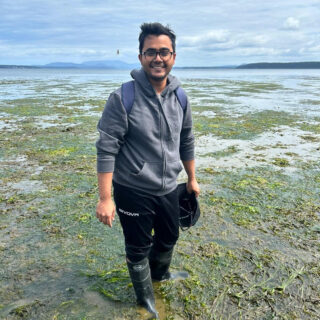
Samin Yasar, a master’s student in biology at Georgia Southern University, is studying Vibrio, a naturally occurring bacterium in coastal waters that can accumulate in oysters.
Yasar will examine Vibrio levels in oysters growing in subtidal and intertidal environments, comparing differences to better understand disease ecology across tidal zones. He will also assess how oyster harvesting and handling practices may influence Vibrio abundance. Findings from this research will help support sustainable aquaculture practices while safeguarding public health.
“The Marine Extension and Georgia Sea Grant Research Trainee Program provides a unique opportunity to connect academic research with real-world coastal and marine resource management. The program’s focus on applied, community-relevant research aligns perfectly with my interests in marine microbiology and sustainable aquaculture.”
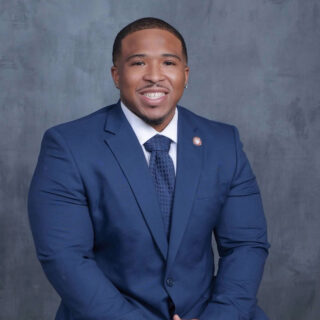
Michon Shaw, a master’s student in biology at Georgia Tech, is studying the biodiversity of oyster reefs constructed in high-energy coastal environments.
Oyster reefs stabilize shorelines, filter water, dissipate wave energy, and encourage sediment deposition. Shaw’s project will track the growth, biodiversity, and overall health of two oyster reefs built along a bank in the Savannah River. By monitoring the reefs’ biological and structural characteristics over time, the research will provide insights into how effectively constructed reefs function as nature-based solutions for habitat enhancement and coastal protection in high-energy environments.
“I decided to apply for the research traineeship for the opportunity to spread awareness and add to the current research being done regarding living shoreline management, green infrastructure and oyster reef sustainability. I also want to get more connections with scientists, professors, and policy makers so that way I can set myself up to make more of an impact post-graduation.”
Marine Extension and Georgia Sea Grant’s Research Traineeship is funded by NOAA’s National Sea Grant College Program. Applications for the 2026-2027 cycle open Feb. 2. Learn more at https://gacoast.uga.edu/research-trainee-program/.