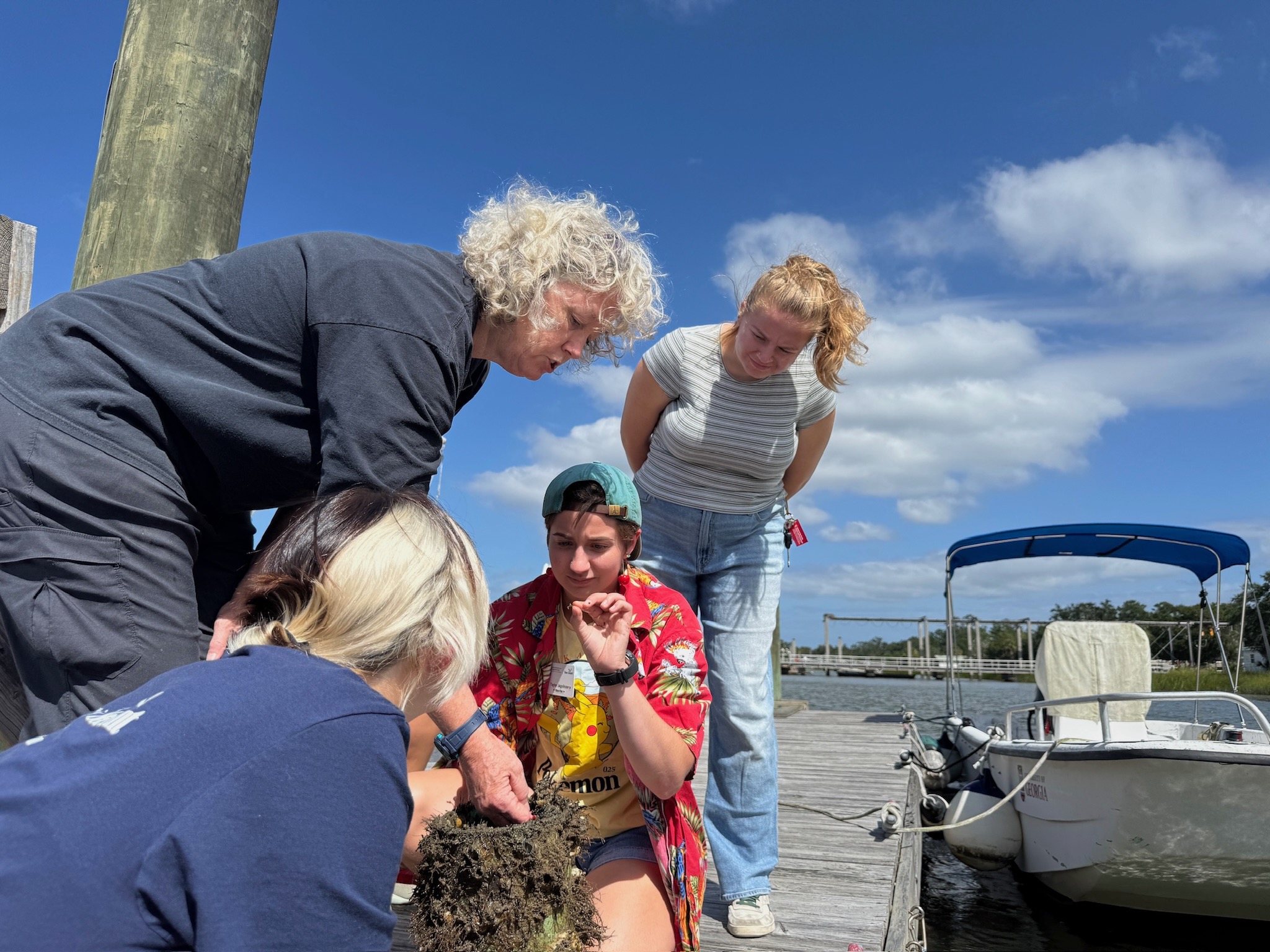
As a city kid raised in Atlanta, I had something in common with many of my peers. My passion for marine science and being immersed in aquatic environments wasn’t facilitated by direct interactions with beach or intertidal marsh ecosystems. Instead, I lived out my science dreams vicariously through museums and aquariums nearby that helped me become more grounded in what I knew wanted to pursue as a career.
As an undergraduate student, I attended Savannah State University where I received my bachelor’s in marine and environmental science. I always like to tell prospective students that getting the chance to attend Savannah State, as an aspiring marine scientist was a dream come true. Where else in Georgia would you be able to walk to a class and see dolphins first thing in the morning? It was almost as if every day you were walking through a National Geographic documentary about estuaries and marshlands. During my time there, I had the privilege of immersing myself in the more clinical and structured aspect of my major by participating in various projects, such as our dolphin fin ID surveys and biopsies and volunteering as an exhibit curator at the Tybee Island Marine Science Center. I also performed a fine scale analysis of fish stocks in the Gray’s Reef National Marine Sanctuary as one of my undergraduate research projects. This experience allowed me to gain a love and appreciation for the research and analysis side of marine science, allowing me to make more immediate decisions about my next steps as a scientist.
The Georgia Institute of Technology was always my dream school. Due to the rigorous academic culture, I felt that I would fit right in. After graduating from Savannah State, I decided to pursue my master’s in biology at Georgia Tech because I wanted that rigorous academic experience and to gain the analytical and computational skills needed to apply what I had learned as an undergrad.
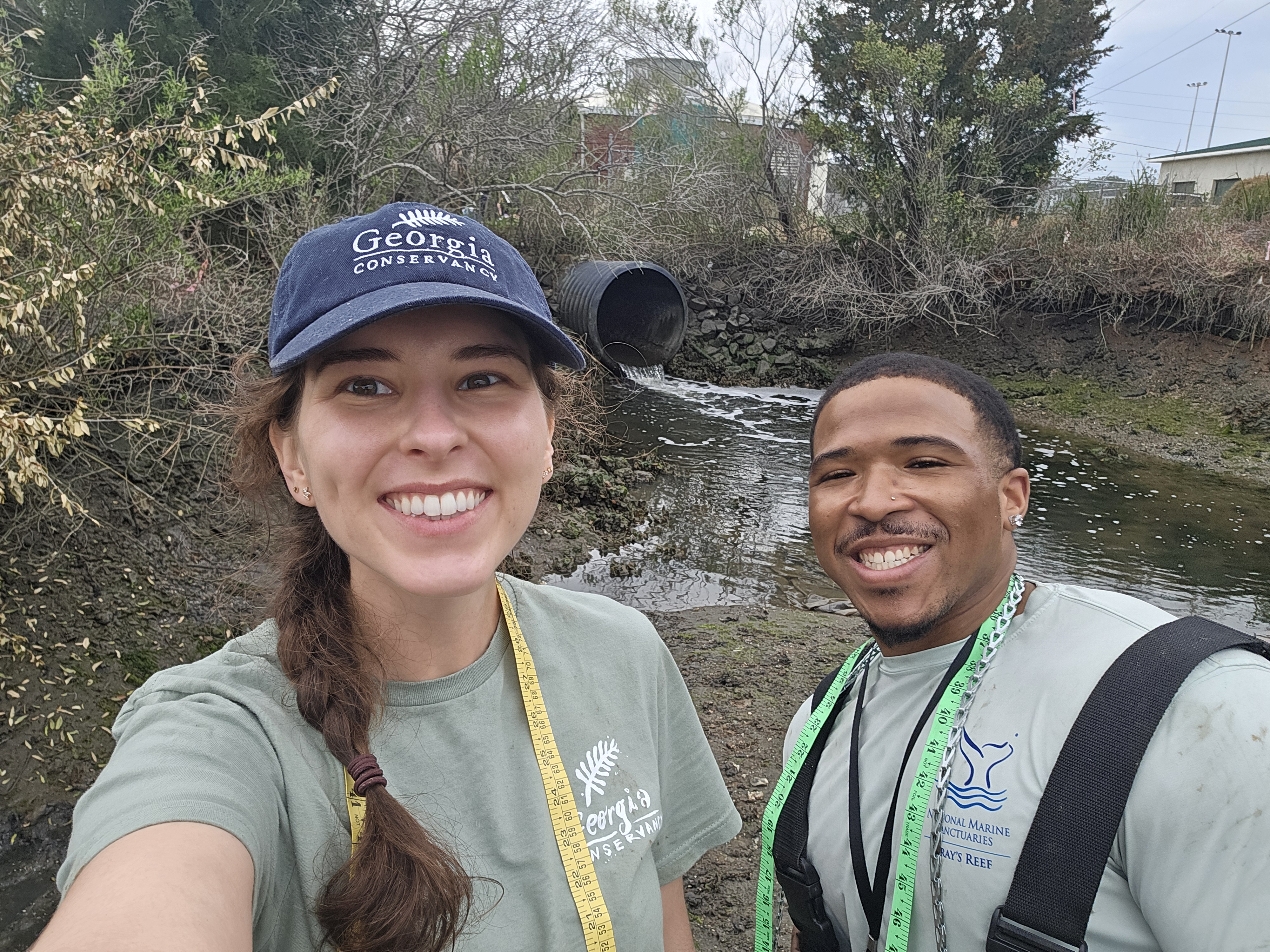
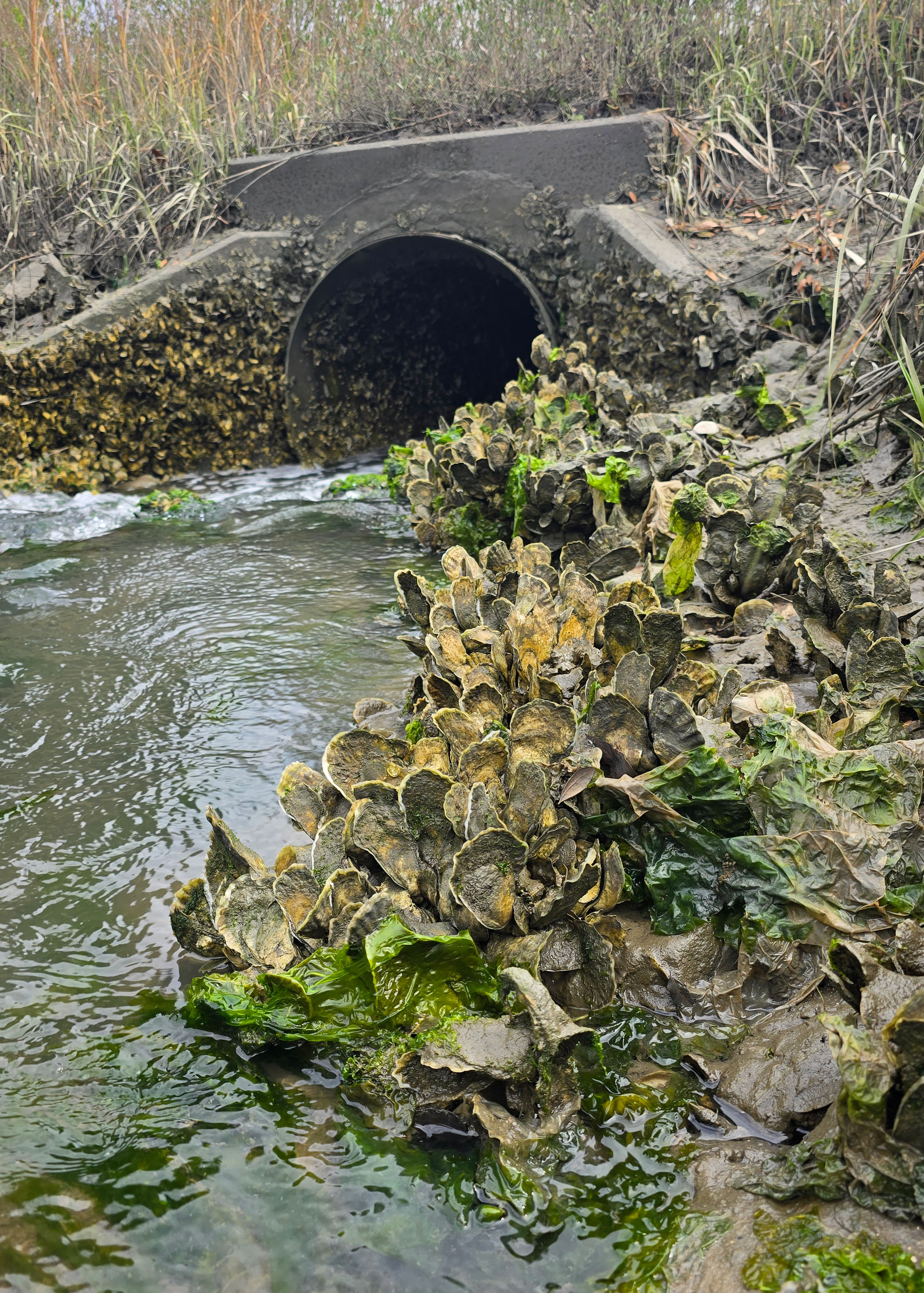
Currently, as a part of my master’s thesis, I am working with the Georgia Conservancy and previous research trainee, Sarah Roney, on implementing reliable shoreline stabilization methods in a culvert near Howard Coffin Park in Brunswick, Georgia. The construction of a living shoreline using oysters will allow for better facilitation of water flow throughout the creek, as well as provide a sustainable substrate that will encourage recruitment of oysters, mussels, clams and other macrofauna that use this creek as a habitat.
As my time at Georgia Tech comes to a close, I am truly grateful to Marine Extension and Georgia Sea Grant for providing me with the opportunity to gain experience and develop the scientific confidence that I needed. Working with mentors, participating in monitoring surveys and learning about wetland permitting and construction, paired with my research through Georgia Tech, has allowed me to be able to explore the multi-disciplinary aspect of marine science that I always wanted to experience.
My next goal is to become acclimated in my field, put the skills I’ve learned into practice, and use the resources that I’ve gained to further my pursuits with natural infrastructure and shoreline stabilization.