Marine Extension and Georgia Sea Grant is pleased to announce University of Georgia graduate Ashley Ohall and Georgia Tech graduate Sarah Roney as 2026 finalists for the National Sea Grant College Program’s John A. Knauss Marine Policy Fellowship.
Named in honor of John A. Knauss, the founder of the National Sea Grant Program, the prestigious, year-long fellowship places current and recent graduate students in host offices within the legislative and executive branches of government. Since its inception in 1979, the Knauss Fellowship has supported more than 1,762 early-career professionals who have gone on to make significant contributions to environmental policy, management and public service.
Knauss finalists are chosen through a competitive process that includes several rounds of review at both the state Sea Grant program and national levels. Ohall and Roney were selected as finalists following nomination by Marine Extension and Georgia Sea Grant and will join a cohort of 48 finalists representing 40 universities and 26 Sea Grant programs nationwide. They bring relevant experience and broad research interests to the program.
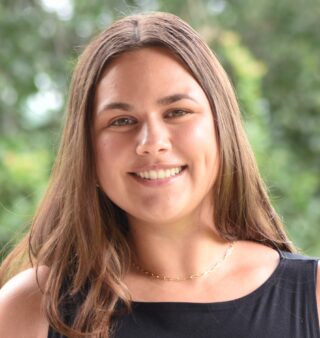
Ohall graduated from UGA with a master’s in marine science in December 2025. Her thesis research, conducted at the UGA Skidaway Institute of Oceanography, focused on studying microplastics using remote sensing. She worked to classify different types of plastic polymers based on how they reflect light with the goal of improving environmental impact assessments and informing policy development. She earned a bachelor’s in biotechnology from the University of Florida, along with a minor in sustainability studies.
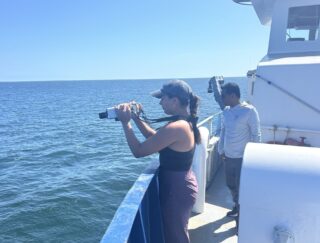
“Policy offers a powerful pathway for science to drive meaningful change, and I want to gain a deeper understanding of the policymaking process,” Ohall said. “The fellowship provides an opportunity to bridge my scientific background with real-world decision making.”
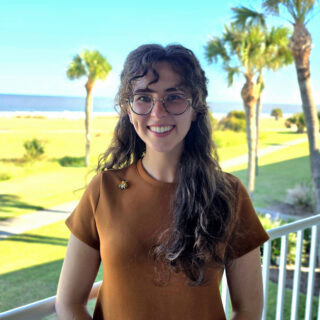
Roney earned a bachelor’s in biology from Georgia Southern University, where she developed a strong interest in marine science. In May 2025, she completed her doctorate in ocean science and engineering at Georgia Tech. Her doctoral research examined how marine prey organisms, including oysters, respond to predators. She also worked with partners across Georgia to apply oysters’ natural predator defenses to oyster reef restoration, supporting the resilience of coastal ecosystems.

“The Knauss Fellowship offers an incredible opportunity to explore how scientific knowledge is applied in the management, protection and regulation of marine and coastal systems across the country, so my decision to apply was easy,” Roney said. “I am excited to expand my professional experiences beyond the realm of research and into the realm of application.”
As part of their fellowship, the 2026 finalists will participate in professional development opportunities, build their networks and have mentorship opportunities. This spring, the finalists will participate in the placement process, during which they will connect with one another and potential host offices. Sea Grant’s 47th class of Knauss fellows will officially begin their fellowships in June 2026.
The Knauss fellowship is funded by NOAA’s National Sea Grant College program. Placement of the 2026 finalists as fellows is contingent upon adequate funding in fiscal year 2026. Learn more about Sea Grant’s Knauss Fellowship and hear from current and past fellows about their experiences.